
View from the Street: Toe curling – is Cram’s lack of cramming a symptom of BBC complacency?
Published

David Gaffney
Steve Cram is a British sporting legend. World champion and Olympic silver medallist over 1500m. In one extraordinary 19-day spell in the summer of 1985, he set world records over 1500m, 2000m and a mile. Since retiring from competition, he has become one of the country’s finest athletics broadcasters, his live commentary elevating exhilarating performances by the likes of Usain Bolt and Kelly Holmes.
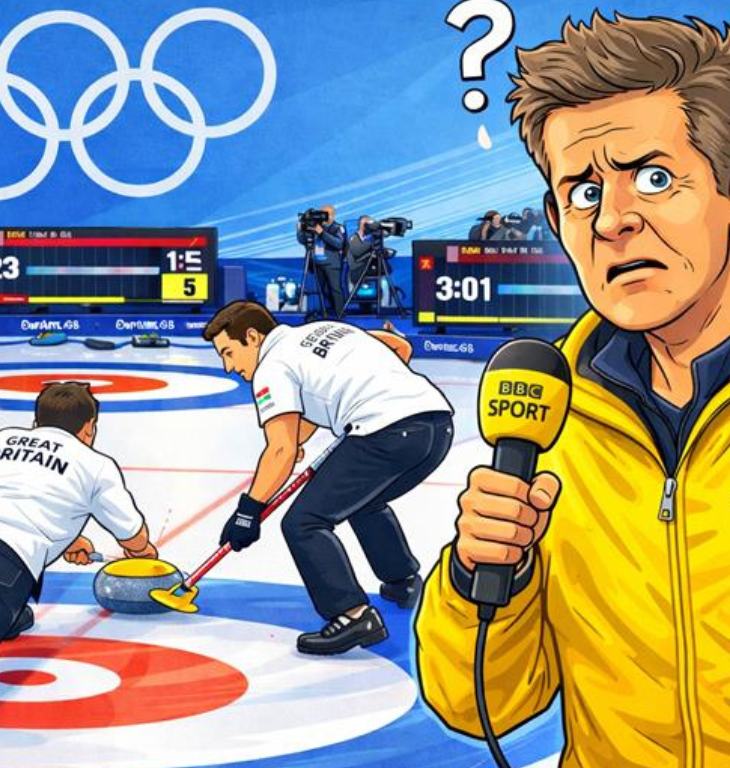
All of which made him the perfect choice for BBC commentating duties at the Winter Olympic curling competition in Cortina this month.
Except it didn’t.
Because despite what BBC sports editors might think, it’s not that simple.
The Winter Olympics doesn’t achieve the widespread attention and affection its summer equivalent receives. But for many Brits – and a disproportionate number of Scots – curling ranks among its most eagerly anticipated events.
Our national interest was piqued by Rhona Martin’s “stone of destiny” in Salt Lake City 2002, then compounded by Eve Muirhead’s redemptive gold in Beijing four years ago.
Curling requires nerves of steel, solid core stability, a steady hand, and an athlete’s capacity for intense anaerobic efforts with the brush. Moreover, it is a complex tactical battle that unfolds over two to three hours. It’s not for nothing they call it “chess on ice”.
The sport has a unique lexicon that sounds medieval and bewildering. Hacks, hammers, hog lines. Rocks, pebbles, counters. Peels, draws, take-outs. Guards, sheets and buttons.
Explaining the subtleties of curling to untrained eyes and ears requires a deep understanding of the game. TV audiences need a commentator fluent in that foreign tongue. Someone able to translate it into terms that enhance our understanding and enjoyment. Not someone more confounded by it all than we are.
Which is what we got with Cram. He blustered and blundered his way through every match, like a Milanese tour guide who had arrived in the city for the first time moments before his customers. And was holding his map upside down.
Commentators regularly use questions to coax their co-commentators onto the airwaves. With Cram, it was more desperate perplexion than rhetorical device.
“What will they do here?” “Why are they playing that shot?”
It was the inner monologue of a novice hopelessly out of his depth.
You could almost hear the scratching of his head as he asked Jackie Lockhart or Logan Gray to make sense of this strange world he’d apparently just woken up in.
Setting aside the complexities of the tactical battles playing out on the ice, there were times he mistook Norwegians for Canadians, Canadians for Americans, and red stones for yellow.
Many was the moment I found myself willing a benevolent producer to lay a gentle hand on Cram’s shoulder and whisper “Steve, why don’t you go for a lie down at the hotel? Jackie and Logan can manage here.”
Now that’s no way for me to be thinking about one of my heroes. And it’s not all his fault.
You don’t reach the peak of international sport without more than a dollop of confidence in your own abilities. Winners are predisposed to believe they can do anything they set their minds to. It’s hardly surprising that when the BBC offered him the gig, he disregarded the odds against and backed himself to succeed.
But the BBC should have known better. This was Cram’s fifth Olympics calling the curling. If his knowledge of the game has developed at all in those 20 years, it has done so at glacial pace.
I have used this platform to defend the BBC on more than one occasion in recent years, and it’s been another bruising week for the corporation. But allocating Cram to curling commentary speaks to something beyond one bad editorial call. The best modern media organisations have a relentless focus on the user experience. They explore new and engaging ways to provide valuable insight and analysis. They consider how best to make the sport accessible to newcomers. The BBC’s own Reithian guiding principles demand it inform, educate and entertain. There’s no question in this case that it failed us on the first two, if not the latter.
If Cram spends the next four years cramming for another live curling examination in the French Alps in 2030, maybe he deserves another shot. But he won’t and he doesn’t.
So the Beeb has plenty of time to find a commentator worthy of that responsibility, who I hope will find the right words to describe at least one British curling gold in France.
In the meantime, I am looking forward to a mouthwatering summer schedule of athletics narrated by the brilliant middle-distance runner and commentator, Steve Cram.